535 East Meadow Ave, East Meadow, NY 11554

What Is the Oldest Recorded Husky Lifespan?

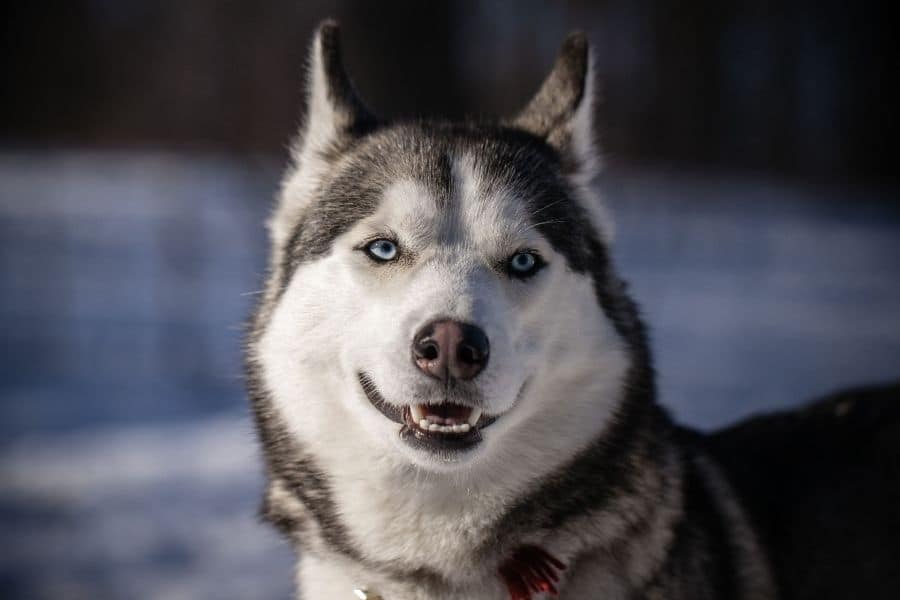
If you have ever looked at your gray-muzzled Husky and wondered, “How many more years can we have together?”, you are not alone. Siberian Huskies are known for their energy, endurance, and playful personalities, and many remain active well into their senior years.
The typical Siberian Husky lifespan is about 12 to 14 years, according to the American Kennel Club. Some breed references place the upper end around 15 years.
But what about the exceptional cases?
Reports of Siberian Huskies reaching 18 or even 19 years old do exist. One well-documented news story from Minnesota reported on a Husky named Balto who was believed to be 19 years old. His owners had lost his original paperwork, though, so his exact birth date could not be independently confirmed.
That leads to an important distinction: 19 years is a reported extreme age, not a universally verified official record for the breed.
So, if you are searching for the oldest recorded Husky lifespan, 19 years is a reasonable number to know, but it should be treated with care.
What Is the Oldest Husky Ever Reported?
The oldest widely reported Siberian Huskies have reached approximately 18 to 19 years of age.
One notable example is Balto, a Siberian Husky from Bagley, Minnesota. In 2022, local reporting described Balto as 19 years old and possibly the oldest Siberian Husky at the time. His owner said he had been adopted as a young adult, but his previous owners had lost his paperwork in a house fire. That meant there was no written birth record confirming his exact age.
Another reported senior Husky named Tori was described as reaching 18 years and approaching her 19th birthday.
There are also reports from longtime Husky breeders of dogs reaching 17 years. For example, Kuuhaukun Kennel reports that some of its oldest Siberian Huskies lived to 17.
These examples show that Huskies can live considerably longer than the breed’s usual range.
However, there is an important limitation: there is no clear Guinness World Records listing that confirms a specific Siberian Husky as the official oldest Husky ever. Guinness does maintain records for canine longevity, but breed-specific claims require reliable documentation.
Is 19 Years Officially Confirmed?
No.
It is more accurate to say that 19 years is among the oldest reported ages for a Siberian Husky, rather than calling it a confirmed world record.
Why does this matter?
A dog’s age is easiest to verify when there are reliable records from birth, such as registration documents, veterinary records, adoption records, or other dated documentation. When those records are missing, an owner’s estimate may still be genuine, but it cannot establish an official age with the same level of certainty.
This is why claims about unusually old dogs should be separated into two categories:
- Reported age: An owner or news source states that the dog reached a certain age.
- Verified record: Reliable documentation confirms the dog’s date of birth and age.
For Huskies, 18- to 19-year-old dogs have been reported, but a definitive official breed record is harder to establish.
How Long Do Siberian Huskies Usually Live?
Most Siberian Huskies do not reach 18 or 19 years.
The AKC lists the breed’s life expectancy at 12 to 14 years. Purina also gives a 12- to 14-year range, while other breed references place the expected lifespan around 12 to 15 years.
That means a Husky reaching 13 or 14 years is not unusual. A Husky reaching 16 or 17 is considerably older than average, while 18 or 19 is exceptional.
A simple way to look at it is:
| Husky age | How it compares |
| 8 years | Mature adult |
| 10 years | Senior years begin |
| 12–14 years | Typical lifespan range |
| 15–16 years | Very long-lived |
| 17 years | Exceptional |
| 18–19 years | Extremely rare |
Age alone does not tell the whole story, though. Two Huskies of the same age can have very different levels of mobility, comfort, vision, hearing, and mental sharpness.
Why Do Some Huskies Live Longer Than Others?
Why does one Husky make it to 17 while another develops serious health problems much earlier?
There is no single answer. Lifespan is influenced by genetics, body condition, nutrition, activity, preventive care, environment, and disease.
Genetics Matter
Genetics play a major role in longevity.
A Husky may inherit traits that increase or decrease its risk of certain health problems. Responsible breeding practices and health screening can help reduce the chance of passing on known inherited conditions.
The Siberian Husky Club of America and AKC recognize health screening for concerns involving the hips, eyes, and certain inherited neurologic conditions.
This does not guarantee a long life. A genetically healthy dog can still develop illness, while an individual with risk factors may live to an unusually advanced age.
Maintaining a Healthy Weight Helps
A Husky’s athletic body is designed for endurance, not excess weight.
Extra pounds put more stress on the joints and can make exercise harder. Keeping a Husky at a healthy body condition can support mobility and overall health as the dog ages.
This becomes especially important during the senior years. A dog that slows down may need fewer calories than it did during its younger, highly active years.
Regular Exercise Is Important
Huskies were developed as working sled dogs. Their bodies and minds are built for activity.
That does not mean every older Husky needs hours of intense running. Exercise should change with age.
A young Husky may enjoy long walks, hiking, running, or structured play. A senior Husky may do better with shorter walks, gentle movement, sniffing activities, and plenty of rest.
The goal is not to keep an older dog exercising like a puppy. The goal is to keep the dog safely moving and mentally engaged.
Preventive Care Can Catch Problems Earlier
Routine health checks become increasingly valuable as a Husky gets older.
Senior dogs can develop changes that are easy to overlook at home. Gradual weight loss, reduced stamina, dental discomfort, changes in drinking, altered bathroom habits, stiffness, or behavior changes may seem minor at first.
Regular wellness exams can help track these changes over time and provide an opportunity to discuss age-appropriate screening, nutrition, mobility, dental health, and other concerns.
The earlier a meaningful change is recognized, the more options you may have for managing it.
Dental Health Should Not Be Ignored
Dental problems can become more common as dogs age.
Bad breath is often dismissed as a normal part of getting older, but persistent odor, tartar, red gums, difficulty chewing, or changes in eating habits deserve attention.
Good dental care throughout a Husky’s life can help protect oral comfort and make eating easier during the senior years.
What Health Problems Can Affect an Aging Husky?
Siberian Huskies are generally considered a relatively healthy breed, but they are not immune to disease. The AKC notes that cancer and arthritis can occur, while eye disease and certain other inherited conditions are also important considerations.
As a Husky gets older, watch for changes such as:
- Difficulty getting up or lying down
- Reluctance to use stairs
- Reduced interest in walks
- Persistent stiffness
- Changes in appetite
- Weight loss or weight gain
- Increased thirst or urination
- Changes in sleep
- Confusion or unusual behavior
- Difficulty seeing or hearing
- Bad breath or trouble chewing
- New lumps or unusual skin changes
None of these signs automatically means a serious disease is present. They are simply reasons to pay closer attention.
Aging happens gradually, and small changes can be easy to overlook when you see your dog every day.
When Is a Husky Considered a Senior?
There is no single birthday when every Husky suddenly becomes a senior.
Because Siberian Huskies commonly live around 12 to 14 years, many are entering their senior period around 8 to 10 years of age. But individual dogs age at different rates.
An eight-year-old Husky may still be energetic and playful, while another may already show signs of reduced stamina.
Instead of focusing only on the number of candles on the birthday cake, look at the whole dog.
Is your Husky still comfortable?
Is their weight stable?
Can they get up easily?
Are they eating normally?
Do they still enjoy their favorite activities?
Have their sleeping or bathroom habits changed?
These everyday observations can tell you a lot about how your dog is aging.
Can a Husky Live Past 15 Years?
Yes, some can.
Reaching 15 years is above the usual lifespan range, but it is possible. Individual Huskies have been reported at 16, 17, 18, and even 19 years old.
Still, an unusually long-lived Husky should be viewed as an exception rather than an expectation.
There is no reliable formula that can tell you that a particular Husky will live to 17, 18, or 19.
Good care can support health and quality of life, but it cannot guarantee a specific number of years.
That distinction is important for Husky owners. The goal should not be to chase a record. The better goal is to give your dog the best possible chance of enjoying comfortable, active years.
How Can You Help Your Husky Age Well?
You cannot control every factor that affects lifespan, but you can control many parts of your dog’s daily routine.
Feed for the Life Stage
Nutritional needs change as dogs grow older.
A senior Husky may need a different calorie intake or diet than a young working dog. The right amount depends on body condition, activity level, age, and overall health.
Avoid making major diet changes based only on internet trends. Discuss your dog’s individual needs with a qualified animal health professional.
Keep Exercise Consistent
Regular, appropriate movement is better than occasional intense activity.
Pay attention to how your Husky responds after exercise. If your dog becomes unusually stiff, tired, or reluctant to move afterward, the activity level may need to be adjusted.
Protect Joint Health
Huskies are active dogs, so mobility becomes an important part of their quality of life.
Provide comfortable resting areas and avoid encouraging an older Husky to repeatedly jump from high surfaces or overdo strenuous activity.
Keeping the dog at a healthy weight also reduces unnecessary stress on aging joints.
Keep the Mind Active
Physical exercise is only part of the picture.
Huskies are intelligent and curious. Puzzle feeders, scent games, gentle training sessions, supervised exploration, and interactive play can help keep an older dog’s mind engaged.
Mental stimulation can also be adapted when vision, hearing, or mobility changes.
What Does a 19-Year-Old Husky Teach Us?
The stories of very old Huskies are fascinating, but they should not create unrealistic expectations.
A 19-year-old Husky has lived well beyond the breed’s typical lifespan. Such a dog represents an exceptional case, not a standard target.
The bigger lesson is that age is not the only measure of a successful life.
A 12-year-old Husky who remains comfortable, engaged, and able to enjoy family life may have excellent quality of life. A 15-year-old dog with significant health challenges may need a very different approach.
For owners, the most useful question is not simply, “How long will my Husky live?”
It is also, “How can I help my Husky stay comfortable and enjoy the time we have?”
Conclusion: What Is the Oldest Recorded Husky Lifespan?
The oldest widely reported Husky lifespan is around 19 years, but there is no clearly verified official record proving that a specific Siberian Husky lived to exactly 19 years. Balto, a Minnesota Husky reported to be 19, is one of the better-known examples, but his exact age could not be confirmed because his original birth records were lost.
For most Siberian Huskies, a more realistic expectation is 12 to 14 years.
Some will live shorter lives, while others will surprise their families by reaching 15, 16, 17, or even beyond.
If your Husky is entering the senior years, focus less on reaching a record age and more on maintaining comfort, mobility, nutrition, preventive care, and enjoyment. Regular health monitoring, appropriate exercise, healthy weight management, and attention to small changes can all help you make informed decisions as your dog grows older.
After all, the best measure of a long Husky life is not just the number of birthdays. It is how many of those years were filled with comfort, companionship, curiosity, and the things your dog loves most.
Frequently Asked Questions(FAQs):
1. What is the oldest recorded Husky lifespan?
A: The oldest widely reported age for a Siberian Husky is around 19 years. However, there is no clearly verified official record confirming a specific Husky as the oldest ever. Some reports of 18- and 19-year-old Huskies exist, but documentation is not always available.
2. What is the average lifespan of a Siberian Husky?
A: A Siberian Husky typically lives 12 to 14 years. Some references give a slightly wider range of 12 to 15 years. Individual lifespan depends on genetics, health, nutrition, body condition, lifestyle, and other factors.
3. Can a Husky live to 20 years?
A: A Husky could theoretically reach 20, but there is no well-established, verified record showing that a Siberian Husky has lived that long. Reports of Huskies reaching 18 or 19 are already considered exceptional.
4. Is a 12-year-old Husky considered old?
A: Yes. At 12, a Siberian Husky is in its senior years and is near the upper end of the breed’s typical lifespan. However, age does not determine health by itself. Some 12-year-old Huskies remain active and comfortable with appropriate care.
5. How can I help my Husky live a longer, healthier life?
A: Maintain a healthy weight, provide age-appropriate nutrition, keep your dog safely active, maintain dental care, monitor changes in behavior and mobility, and schedule regular health checks. Senior wellness exams can be especially useful for tracking changes that may not be obvious at home.